University of Kmt
What happens when an economy can produce more while employing fewer people? For Black communities, preparing for that possibility requires an understanding of Ujamaa / Cooperative Economics that reaches far beyond Black capitalism.
Dr. Tdka Maat Kilimanjaro and the University of Kmt offer resources for that work. An independent Pan-African working-class cooperative, the University brings scholarship, technical education, and ethics together to address fundamental questions of collective life. Three of its publications deserve particular attention.
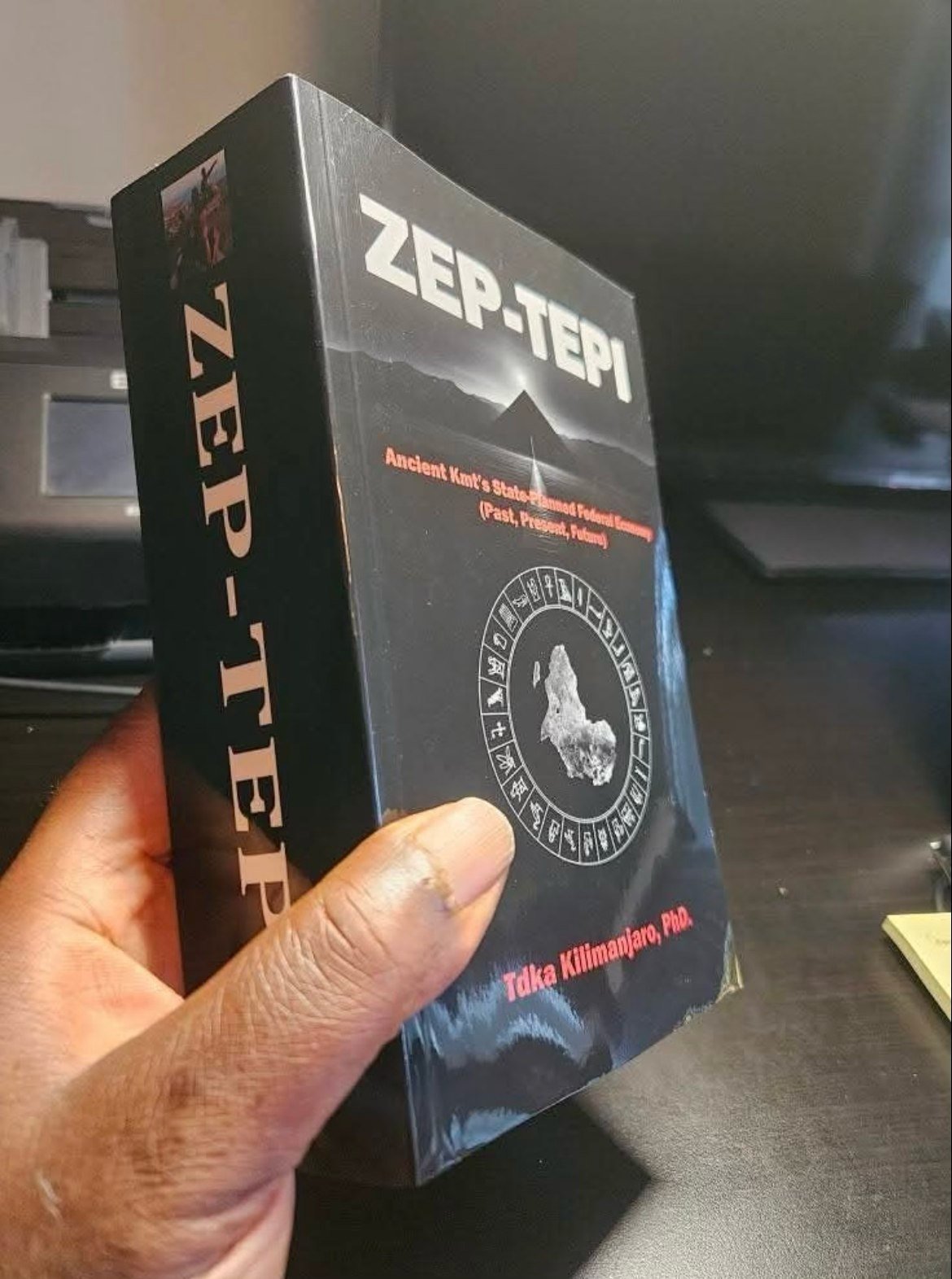
Zep-Tepi examines ancient Kmt through Kilimanjaro’s framework of a federally organized, centrally state-planned economy. Drawing on land, human capabilities, and the Nile’s resources, this interpretation invites us to study how coordinated production and distribution could serve society’s needs.
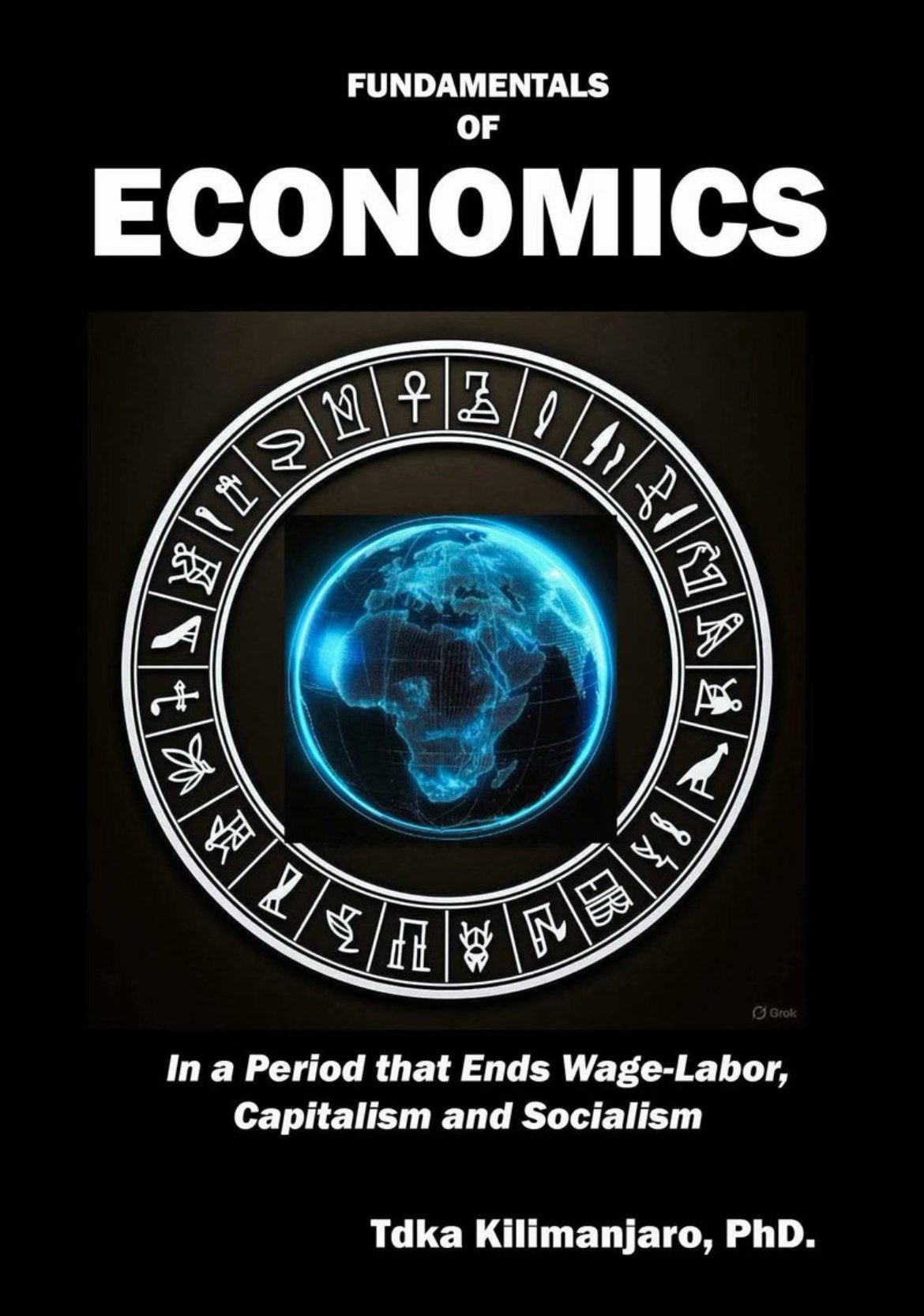
Fundamentals of Economics extends the discussion toward a changing economic order. Its subtitle explicitly anticipates a period ending wage labor, capitalism, and socialism—challenging readers to consider how people might secure necessities when employment no longer reliably distributes purchasing power.
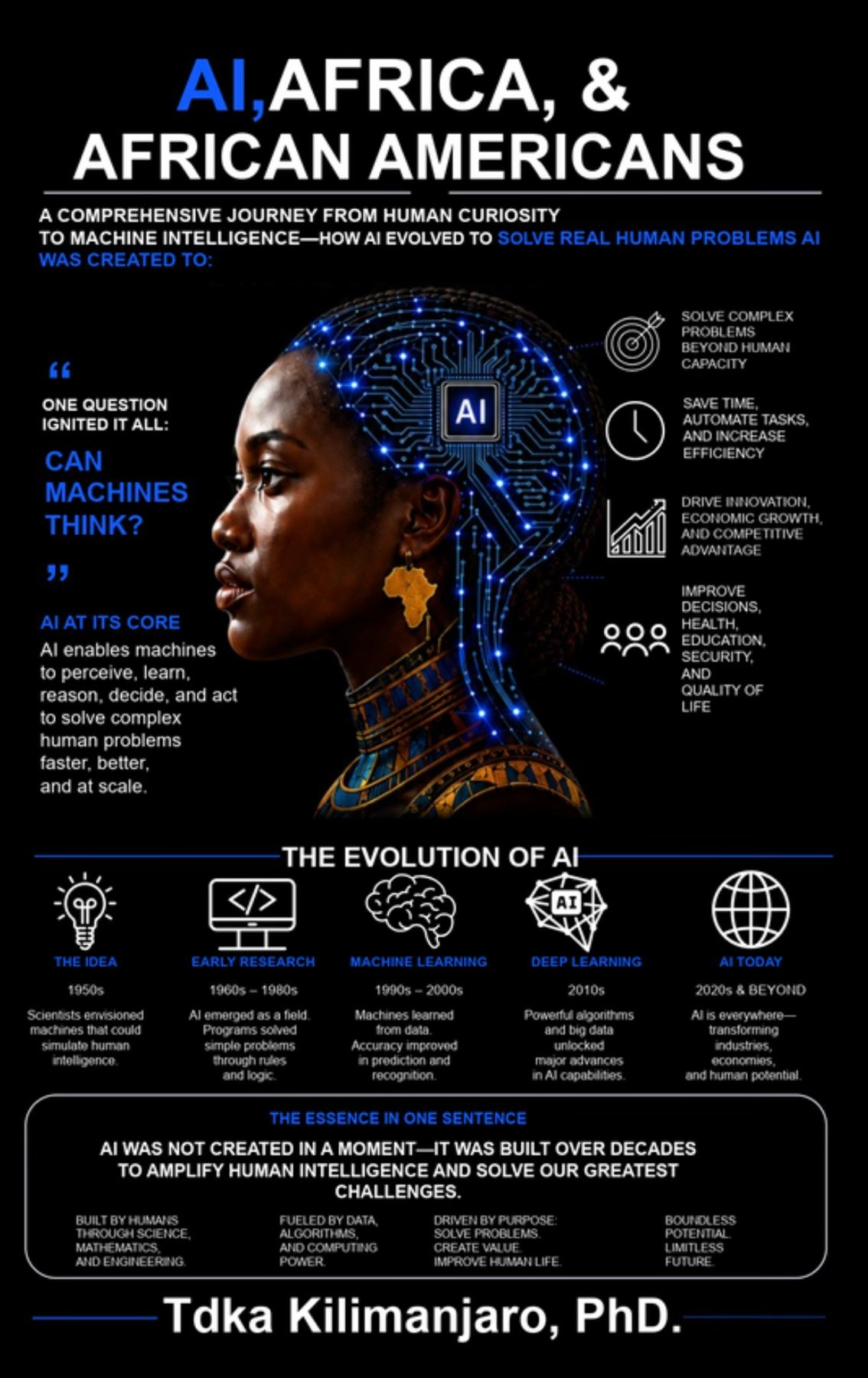
AI, Africa, & African Americans places technological change directly within that inquiry. Its cover traces AI’s development and emphasizes its potential to solve problems, automate tasks, and improve human life. Read alongside the economic texts, it raises an essential question: who will control these capabilities, and who will benefit?
Together, these works invite a deeper application of Ujamaa: shared ownership, coordinated planning, technical mastery, and collective provision. Cooperative farms, manufacturing, housing, energy, and technological infrastructure become interconnected responsibilities.
As AI and robotics transform work, Black communities need this level of preparation. The task is to develop economic institutions capable of sustaining our people—and ensuring that greater productive capacity becomes greater collective well-being.